How much gravel do you need under a concrete slab?
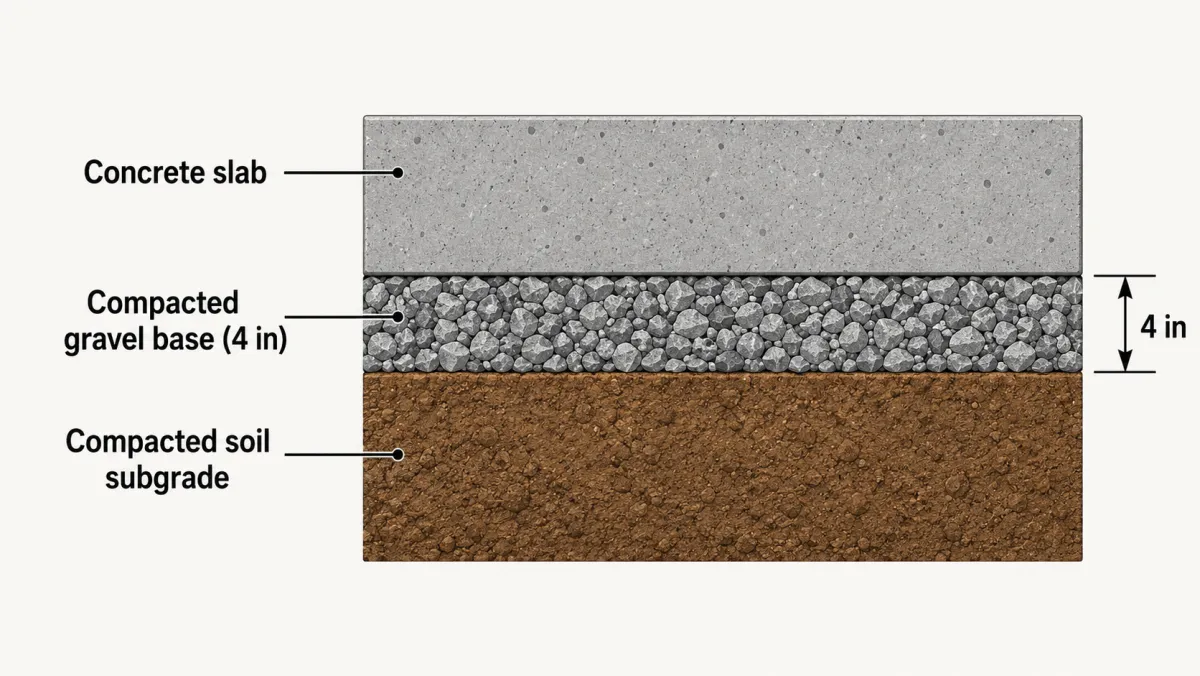
Most concrete slabs sit on a 4-inch base of compacted gravel. To find how much you need, multiply the slab's area by that depth and convert the volume to tons or cubic yards. This guide gives you the 3-step calculation, a depth chart by project, real worked examples, and the right gravel to buy — and the gravel calculator does the math for you.
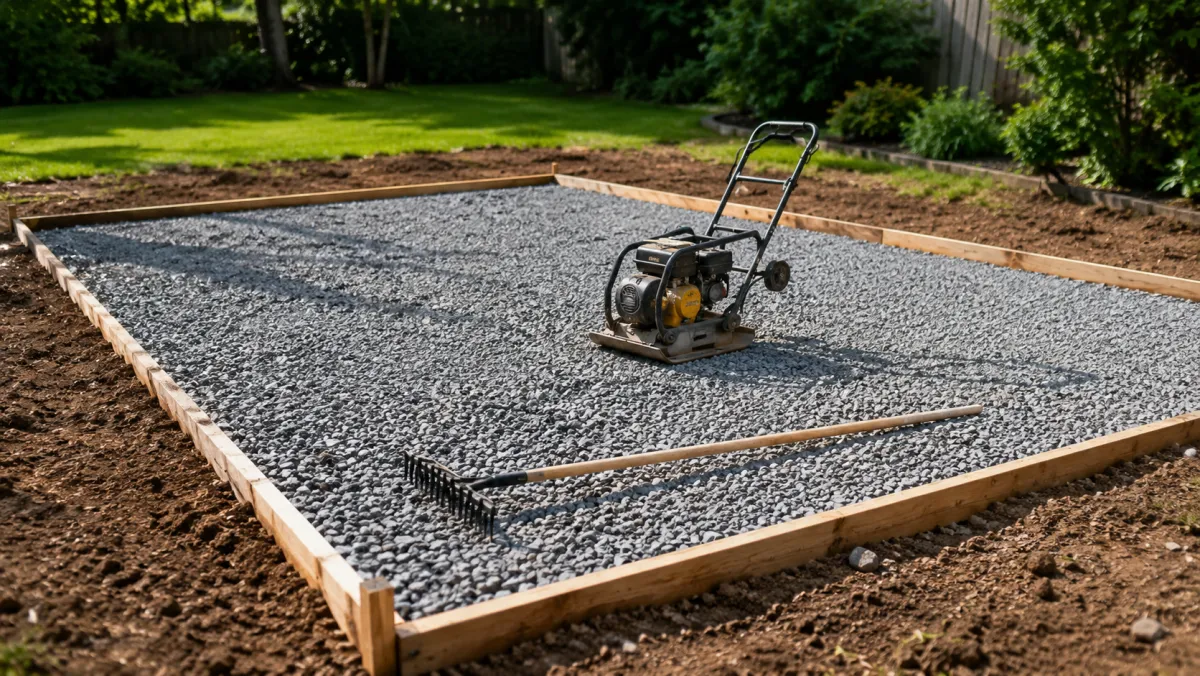
Why the gravel base matters
The gravel layer under a slab — engineers call it the subbase — is compacted crushed stone sitting between your soil and your concrete. It does three jobs at once. It spreads the slab's load over a wider area of ground, it lets water drain away instead of pooling and heaving underneath, and it gives you a firm, level platform to pour and screed against.
Skip it, and even a thick slab can crack as the ground below holds water, freezes, or settles unevenly. Industry guidance treats a compacted granular subbase as standard practice for slabs on ground, and getting the amount right the first time keeps the whole pour smooth.
The short answer
For most home slabs — patios, walkways, shed floors — you want about 4 inches of compacted gravel. Driveways and slabs over soft or clay soil step up to 6 to 8 inches.
That 4-inch figure is not arbitrary: industry references set 4 inches as the practical minimum for an unstabilized granular base and note that going much thicker adds only small gains in support. So 4 inches is your baseline, and you add depth for heavier loads and poorer soil, not for its own sake.
The calculation in 3 steps
Finding your gravel amount is the same three steps every time:
- Measure the area. Length × width of the slab, in feet, gives you the square footage.
- Choose the depth. Four inches is standard; go deeper for driveways or soft ground (see the chart below).
- Convert to what you'll order. Multiply area × depth in feet for cubic feet, divide by 27 for cubic yards, then multiply by about 1.4 for US tons.
Cubic yards = (area in sq ft × depth in ft) ÷ 27
For example, a 10 × 10 ft slab with a 4-inch base: 100 × 0.33 = 33 cubic feet ≈ 1.23 cubic yards ≈ 1.7 tons.
Enter your slab size and a 4-inch depth to get the gravel in tons, cubic yards, and bags.
How deep should the gravel base be?
Depth depends on the load and the soil. This chart covers the common cases:
| Project | Gravel base depth |
|---|---|
| Walkways, patios, shed floors | 4 inches |
| Driveways (cars) | 4–6 inches |
| Garage floors | 4–6 inches |
| Heavy loads, or soft / clay soil | 6–8 inches |
And here is how much gravel each depth needs per 100 square feet of slab, so you can scale to your size:
| Depth | Per 100 sq ft | Approx. tons |
|---|---|---|
| 4 inches | 1.23 cubic yards | 1.7 |
| 6 inches | 1.85 cubic yards | 2.6 |
| 8 inches | 2.47 cubic yards | 3.5 |
Worked examples
Example 1: a 10 × 10 ft patio slab
The area is 100 square feet, and a patio takes a standard 4-inch base.
- Volume: 100 × (4 ÷ 12) = 33.3 cubic feet
- Cubic yards: 33.3 ÷ 27 = about 1.23 cubic yards
- Weight: 1.23 × 1.4 = about 1.7 tons
Example 2: a 20 × 20 ft driveway slab
The area is 400 square feet, and a driveway over average soil takes a 6-inch base.
- Volume: 400 × (6 ÷ 12) = 200 cubic feet
- Cubic yards: 200 ÷ 27 = about 7.4 cubic yards
- Weight: 7.4 × 1.4 = about 10.4 tons
At that size, you can see why depth matters to the budget: dropping the driveway to a 4-inch base would cut the gravel to about 4.9 cubic yards, but a 4-inch base is light for a vehicle slab. This is exactly the trade-off the depth chart helps you make.
What kind of gravel to use
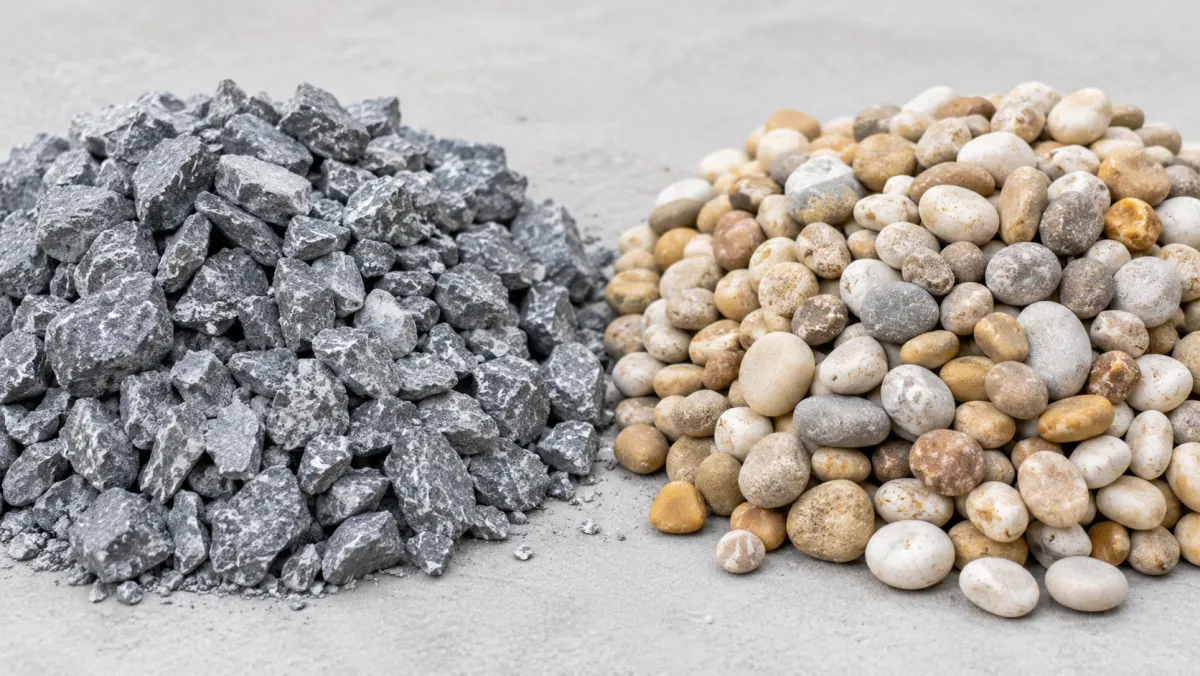
Use an angular, compactable crushed stone — often sold as road base, crusher run, or Class II. These blend crushed stone with fine particles that lock together into a dense, stable layer when compacted. Avoid smooth pea gravel, which is rounded and will not knit together under load, and avoid stone dust or screenings on their own, which trap water.
How to prepare and compact the base
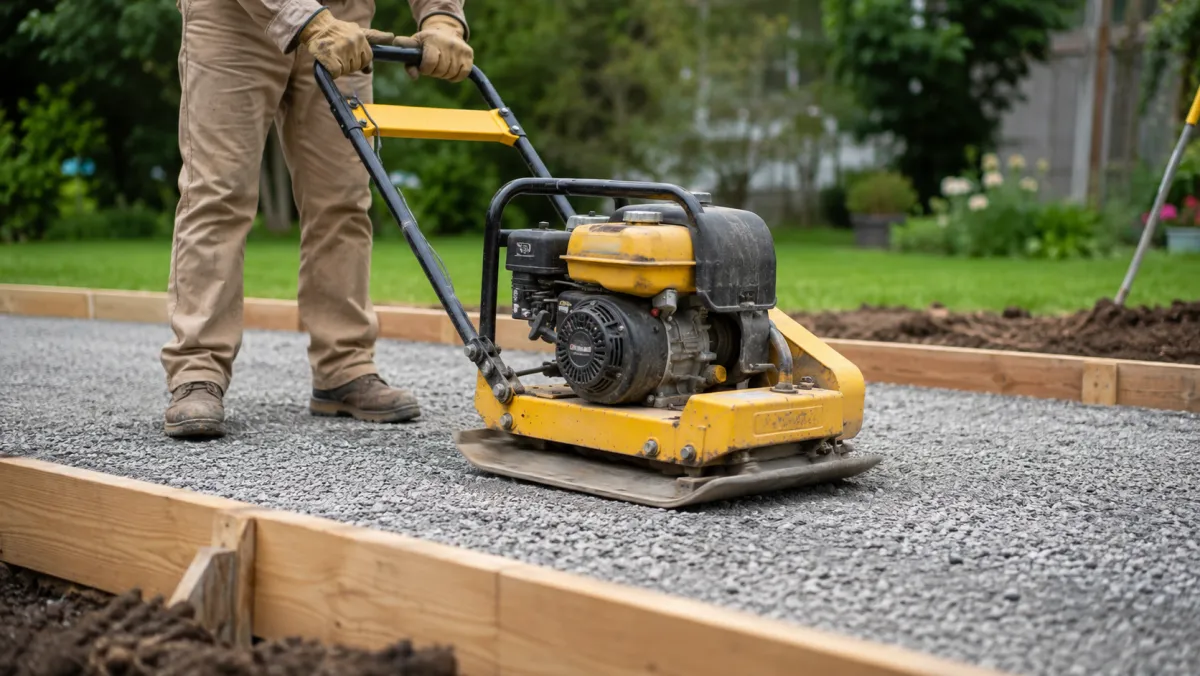
The amount is only half the job; compaction is the other half. A loose pile of the right gravel still cracks slabs. Here is the sequence:
- Excavate to allow for your base depth plus your slab thickness, and compact the soil subgrade first.
- Add gravel in layers. Spread it in lifts of about 4 inches — a plate compactor cannot fully compact much more than that in one pass, so a 6 or 8-inch base goes down in two lifts.
- Compact each layer with a plate compactor, or a rammer for clay, until it stops moving under the plate.
- Check that it is firm. A properly compacted base shows no footprints and does not rut or pump water when a loaded wheel rolls across it.
- Grade and level the top, sloping it to match your finished slab and to drain water away from buildings.
Once the base is solid and graded, you are ready to size the slab itself. Our companion guide on how thick a concrete slab should be covers the pour above the base, and the concrete calculator turns your dimensions into cubic yards and pre-mix bags.
Common mistakes
- Skipping the base entirely. Pouring straight onto soil is the classic recipe for a cracked, settling slab.
- Using pea gravel. Rounded stone won't compact into a stable base. Use angular crushed stone.
- Compacting too thick a layer at once. Lifts over about 4 inches leave the bottom loose, which settles later.
- Not compacting the subgrade first. Soft soil under the gravel undoes all your work above it.
- Ordering the exact amount. Add 5 to 10 percent for compaction and uneven ground.
- Ignoring drainage and slope. A base that holds water against the slab still causes problems; slope it to drain.
Frequently asked questions
How thick should gravel be under a concrete slab?
Four inches of compacted gravel is standard for patios, walkways, and shed floors. Driveways, heavy loads, or slabs over soft or clay soil are usually built on 6 to 8 inches.
How much gravel do I need for a 10x10 slab?
For a 10 by 10 foot slab with a 4-inch base, about 33 cubic feet, which is roughly 1.23 cubic yards or about 1.7 tons. Add 5 to 10 percent extra for compaction and uneven subgrade.
How much gravel do I need for a 20x20 slab?
A 20 by 20 foot slab is 400 square feet. With a 6-inch base that is 200 cubic feet, about 7.4 cubic yards or roughly 10.4 tons. Driveways at this size usually need the deeper 6-inch base.
What kind of gravel goes under a concrete slab?
Angular, compactable crushed stone, often sold as road base, crusher run, or Class II. These contain fines that lock together when compacted. Avoid smooth pea gravel, which will not knit together under load.
Can I use pea gravel under a concrete slab?
It is not recommended. Pea gravel is rounded and will not compact into a stable, locked base, so the slab can shift and crack. Use angular crushed stone such as road base or crusher run.
Do I really need gravel under a concrete slab?
In almost all cases, yes. The gravel base spreads the slab's load and lets water drain instead of pooling underneath, which is a major cause of cracking. Pouring straight onto soil risks an uneven, cracking slab.
Should I compact the gravel before pouring concrete?
Yes. Compact the gravel in layers of about 4 inches with a plate compactor until it stops moving and shows no footprints. Uncompacted gravel settles later and can crack the slab.
Do I need a vapor barrier over the gravel?
Interior or enclosed slabs often use a vapor barrier over the gravel to stop ground moisture rising into the slab. Outdoor slabs like patios usually do not. Follow local code, and where a barrier is used, some guidance adds a thin granular layer over it before pouring.
Can I pour concrete directly on dirt?
It is not recommended. Soil holds water, heaves, and settles unevenly, which cracks slabs. A compacted gravel base spreads the load and drains water, giving a much longer-lasting slab.
How deep should the gravel base be for a driveway?
A driveway over average soil usually needs 4 to 6 inches of compacted gravel. Over soft or clay soil, or for heavier vehicles, step up to 6 to 8 inches.
Helpful resources
These authoritative sources offer reliable, standards-based guidance on subbases and base preparation under concrete slabs.
- Subgrades and Subbases for Concrete Pavements (EB204P, PDF) Source: American Concrete Pavement Association / Portland Cement Association. The industry engineering bulletin on subbase thickness, materials, and compaction.
- Concrete Materials and Properties (Chapter 4, PDF) Source: Wisconsin Department of Agriculture, Trade and Consumer Protection (.gov). Explains the 4-inch minimum granular subbase and compacting in 4 to 6-inch lifts.
- Bases and Subbases for Concrete Pavement (Tech Brief, PDF) Source: U.S. Federal Highway Administration (FHWA). A government overview of base and subbase function, materials, and load transfer.
Conclusion
Gravel under a concrete slab comes down to three things: the right depth, the right stone, and proper compaction. Use a 4-inch compacted base for patios, walkways, and shed floors, and 6 to 8 inches for driveways and poor soil. Pick an angular, compactable crushed stone like road base or crusher run, compact it in 4-inch layers, and add 5 to 10 percent to your order for settling and uneven ground.
When you are ready, run your slab size and depth through the YardFigure Gravel Calculator for the base, then the concrete calculator for the slab itself. And if you are still deciding how thick to pour, the concrete slab thickness guide walks through the right depth for your project.
Keep planning
Related
How thick should a concrete slab be?
The right slab thickness by project, base included.
Read guide →